Practical Over Prestige: How Further Education Colleges Are Quietly Winning Britain's Hospitality Talent Race

Photo: Stephen Craven, CC BY-SA 2.0, via Wikimedia Commons
Practical Over Prestige: How Further Education Colleges Are Quietly Winning Britain's Hospitality Talent Race
For much of the past two decades, the prevailing narrative in UK education has positioned university degrees as the default aspiration and vocational qualifications as a secondary path — something chosen rather than sought. In British hospitality, that framing is beginning to unravel in ways that matter enormously for employers, educators, and the young people considering their options.
Further education colleges with dedicated hospitality and catering faculties are producing graduates who can butcher, balance a section, cost a menu, and manage a small team before they have reached their twenty-first birthday. The industry is paying attention.
The Employability Gap That Universities Have Struggled to Close
The challenge facing hospitality management degree programmes is not academic rigour — many are genuinely demanding — but the inevitable distance between theoretical study and operational reality. A three-year undergraduate programme can develop strategic thinking, analytical capability, and business literacy. What it frequently cannot replicate is the embodied knowledge that comes from standing service, running a live kitchen, or managing a hospitality unit under genuine commercial pressure.
Further education colleges, by contrast, are structured around exactly this kind of practical immersion. Students at colleges with strong hospitality departments typically spend substantial portions of their programme working in commercial training restaurants, hotel facilities, and event operations that serve real paying customers. The feedback loop between classroom and kitchen is measured in hours rather than semesters.
Recruiters across the sector have begun to articulate this distinction with increasing clarity. "I can teach a motivated person our systems and our standards," observed one executive chef at a London hotel group. "What I cannot easily teach is the composure and pace that comes from having done real service hundreds of times. FE students often arrive with that already."
College Success Stories Worth Examining
Westminster Kingsway College in London has long been regarded as a benchmark institution in this space, producing alumni who have progressed to senior roles across Michelin-starred restaurants, luxury hotels, and prominent contract catering operations. Its commercial training restaurant, Vincent Rooms, operates as a genuine hospitality business — not a simulation — giving students exposure to real service pressure, customer expectations, and operational consequence.
 Photo: Vincent Rooms, via dineawardslondon.com
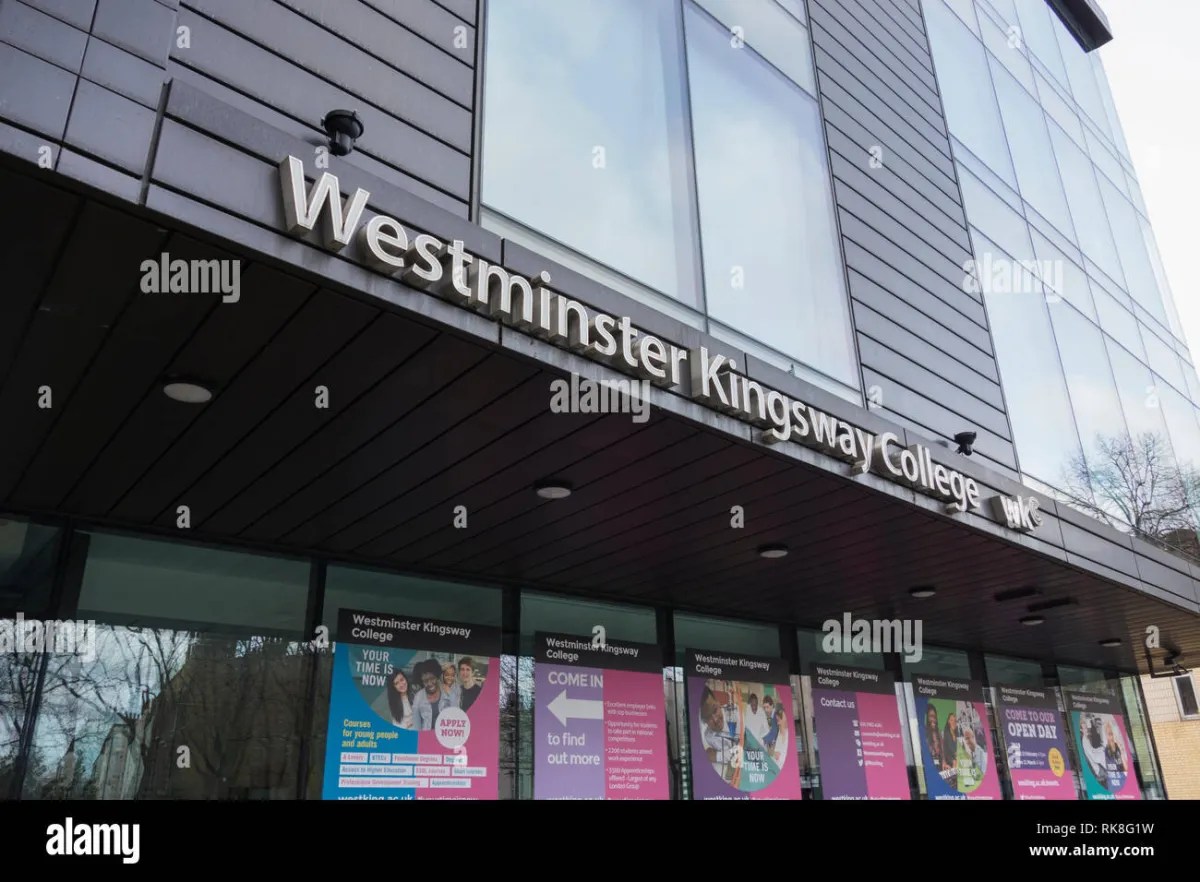 Photo: Westminster Kingsway College, via c8.alamy.com
Outside London, Kendal College in Cumbria has built a reputation for producing professionals who move seamlessly into the Lake District's premium hospitality economy, with employer partnerships that extend well beyond placement paperwork into curriculum co-design and guaranteed interview schemes. City of Glasgow College similarly maintains deep relationships with Scotland's hotel and event sector, with employment outcomes that consistently outperform regional graduate benchmarks.
What these institutions share is a willingness to treat employer relationships as foundational rather than supplementary. Curriculum advisory boards with active industry participation, chefs and front-of-house managers contributing to teaching programmes, and placement coordinators who maintain genuine ongoing relationships with hiring contacts — these structural commitments produce measurably different outcomes.
The Employer Perspective: Preference, Not Compromise
It would misrepresent the situation to suggest that employers who favour FE-trained candidates are settling for something. Conversations with hiring managers across the sector reveal a more considered position: for many operational roles, and increasingly for supervisory and junior management positions, FE graduates are simply better prepared.
"We take from both routes and value both," noted a talent acquisition manager at a major contract catering operator. "But when I'm filling a chef de partie role or a front-of-house team leader position, the candidate who has done a Level 3 at a good college and completed a substantive placement will almost always hit the ground running faster than a graduate trainee. That matters when you're running busy operations."
This view is reinforced by data from the sector. Apprenticeship and vocational qualification completions in hospitality have grown steadily in recent years, and employer satisfaction surveys consistently rate work-readiness among FE and apprenticeship-trained staff more highly than among university graduates entering equivalent roles.
The Economics of Vocational Training
The financial dimension of this conversation cannot be ignored. With undergraduate tuition fees in England standing at £9,250 per year — a figure that appears likely to rise further — and graduate starting salaries in hospitality rarely justifying the debt incurred, the economic case for the university route is increasingly difficult to make in straightforward terms.
A Level 3 diploma or Higher National Certificate in Hospitality Management can be completed at a fraction of the cost, often with bursary support or employer co-funding, and delivers direct occupational currency rather than a qualification that requires significant additional on-the-job translation before it becomes operationally useful.
For young people from less affluent backgrounds — a demographic the hospitality sector has historically both relied upon and underserved — the FE route offers a genuinely accessible pathway to meaningful employment without the burden of substantial debt.
A Timely Rebalancing
None of this represents an argument against university education in hospitality. Degree programmes develop skills and perspectives that vocational training does not prioritise, and for professionals with ambitions in strategic management, consultancy, or academic roles, higher education remains valuable. The issue is not which route is superior in absolute terms, but which route is most appropriate for which ambitions — and whether the industry's recruitment culture has adequately recognised the distinct strengths of the FE pathway.
The evidence suggests a rebalancing is already underway. Employers who were once reluctant to consider candidates without degree-level qualifications for management trainee schemes are revising their thinking. Colleges are investing in facilities, staff, and industry partnerships that reinforce their competitive position. And a generation of hospitality professionals trained in further education institutions is demonstrating, through their performance, that practical excellence is a form of prestige worth celebrating on its own terms.