Dark Kitchens, Bright Futures: How Britain's Delivery-Only Food Revolution Is Cultivating a New Generation of Culinary Entrepreneurs
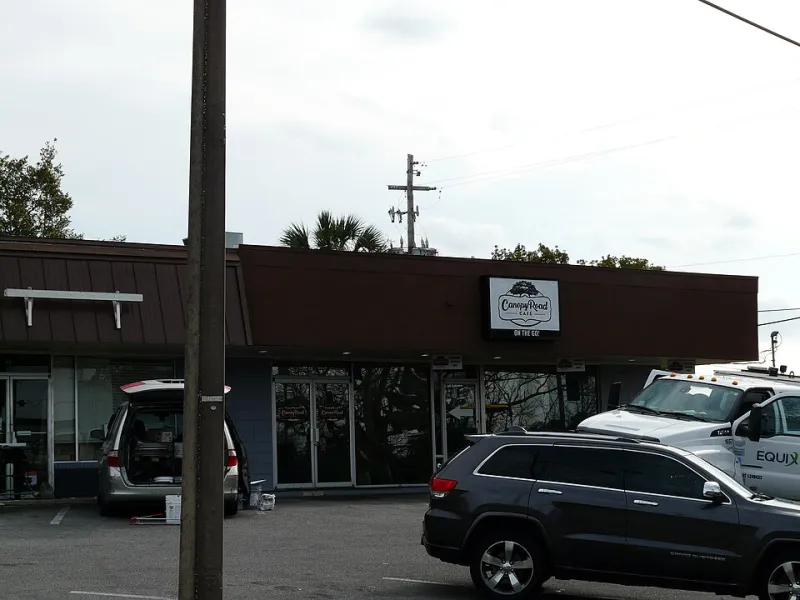
Photo: The Bushranger, CC BY-SA 4.0, via Wikimedia Commons
The Infrastructure of a New Industry
Drive through any major British city at the right hour and you will pass, without knowing it, the engine rooms of a significant and growing food economy. Unremarkable industrial units and repurposed commercial kitchens in London, Manchester, Birmingham, Leeds, and Bristol are producing thousands of meals each evening for delivery platforms — meals that carry brand names, social media followings, and in some cases genuine cult status among their customer bases, yet have never once been served across a restaurant table.
The ghost kitchen sector — also referred to as dark kitchens, virtual restaurants, or delivery-only concepts — has expanded dramatically in the UK since the early 2020s. Operators including Deliveroo Editions, Karma Kitchen, and CloudKitchens have developed purpose-built multi-brand facilities that allow food entrepreneurs to operate with minimal capital outlay and maximum operational focus. The model strips away the most expensive elements of traditional restaurant operation — front-of-house staffing, dining room fit-out, prime retail rent — and concentrates investment where it arguably matters most: the food itself, the brand, and the logistics.
For hospitality professionals with culinary expertise and entrepreneurial ambition, this infrastructure represents a genuinely accessible launchpad. The question is how to use it strategically.
What Transfers, and What Doesn't
Professionals moving from traditional kitchen environments into ghost kitchen operation bring considerable relevant experience. Technical cooking ability, kitchen management, supplier relationships, food safety compliance, and the capacity to perform consistently under pressure are all directly transferable and remain essential. A ghost kitchen that cannot produce food reliably, at quality, and at volume during peak delivery windows will not survive regardless of how sophisticated its branding or how clever its menu design.
However, the operational differences are substantial and should not be underestimated.
In a traditional restaurant, the dining room provides real-time feedback. A chef can observe the pace of service, respond to the mood of the room, and receive immediate signals about how dishes are being received. In a ghost kitchen, that feedback loop is absent. Performance is measured through platform ratings, order volumes, reorder rates, and customer reviews — data points that require a different kind of analytical literacy to interpret and act upon.
Packaging becomes a culinary consideration in a way that simply does not apply in conventional settings. A dish that performs beautifully on a plate in a restaurant kitchen may arrive at a customer's door in a significantly diminished state if the packaging has not been designed with the journey in mind. Successful ghost kitchen operators invest considerable thought in how their food travels — which is, in effect, a form of quality control that extends well beyond the kitchen pass.
Perhaps most significantly, marketing and brand development — functions entirely absent from most culinary training — become central responsibilities. A ghost kitchen concept without a compelling digital identity and an effective presence on delivery platforms is functionally invisible. Professionals who have never had to think about social media strategy, photography, menu copy, or platform optimisation must either develop these skills or find credible collaborators who possess them.
Building a Brand Without a Room
The absence of a physical dining space is, depending on one's perspective, either the ghost kitchen model's greatest limitation or its most interesting creative challenge. Without a room to design, a front-of-house team to brief, or an atmosphere to curate, brand identity must be communicated entirely through the food, the packaging, and the digital presence.
The most successful UK ghost kitchen operators have approached this constraint with genuine ingenuity. Concepts built around a tightly defined culinary identity — a single protein, a specific regional cuisine, a distinctive dietary philosophy — tend to outperform those that attempt broad appeal. The delivery market rewards clarity and memorability, and operators who understand this from the outset build more coherent brands and more loyal customer bases.
Several professionals who began with ghost kitchen concepts have subsequently used the brand equity they developed — evidenced through order volumes, review scores, and social media engagement — as the foundation for seeking investment in physical premises. The ghost kitchen, in these cases, functions as a proof-of-concept phase: a relatively low-risk environment in which to validate a food concept, build a customer base, and develop the commercial disciplines that traditional restaurant ownership demands.
The Realities of the Model
Honesty about the challenges of ghost kitchen operation is essential for any professional considering this path.
Margins in the delivery sector are structurally compressed. Platform commission rates — typically ranging from 25 to 35 per cent of order value — represent a significant cost that must be factored into pricing strategy from the outset. Ingredient costs, packaging, kitchen rental, and labour must all be managed within what remains, which demands a level of financial precision that not all culinary professionals are accustomed to applying.
The competitive landscape on delivery platforms is intensely crowded. Standing out in a market where customers can scroll through dozens of similar concepts requires consistent investment in ratings management, promotional activity, and menu evolution. Operators who treat their platform presence as a passive channel rather than an active commercial responsibility tend to experience rapid decline in order volumes.
Building a genuine career identity in this space also requires confronting a cultural reality: the ghost kitchen sector is not yet universally understood or respected within the broader hospitality industry. Professionals who have built their experience entirely within delivery-only environments may encounter scepticism from employers or collaborators more familiar with traditional culinary pathways. Addressing this requires a clear and confident articulation of the commercial, operational, and entrepreneurial skills developed — and the measurable outcomes achieved.
A Stepping Stone or a Destination?
For the most ambitious professionals, the ghost kitchen is a beginning rather than an end. The disciplines it demands — brand development, financial management, data-driven decision-making, supply chain control — are precisely the competencies that translate into broader entrepreneurial success in the food and hospitality industries.
A number of UK culinary entrepreneurs who began with delivery-only concepts have since expanded into food retail, wholesale supply, cookery education, and branded product development. Others have used the credibility and capital generated through ghost kitchen operations to fund the restaurant projects they always intended to pursue, arriving at those projects considerably better prepared than they would have been had they attempted them first.
For hospitality professionals in Britain who possess culinary skill, commercial curiosity, and the willingness to operate without the familiar structures of a traditional kitchen environment, the dark kitchen offers something the industry has rarely provided in such accessible form: the opportunity to build something entirely their own, on their own terms, from a standing start.