The Uneven Pass: Confronting the Barriers That Slow Women's Progress to Senior Kitchen Roles in Britain
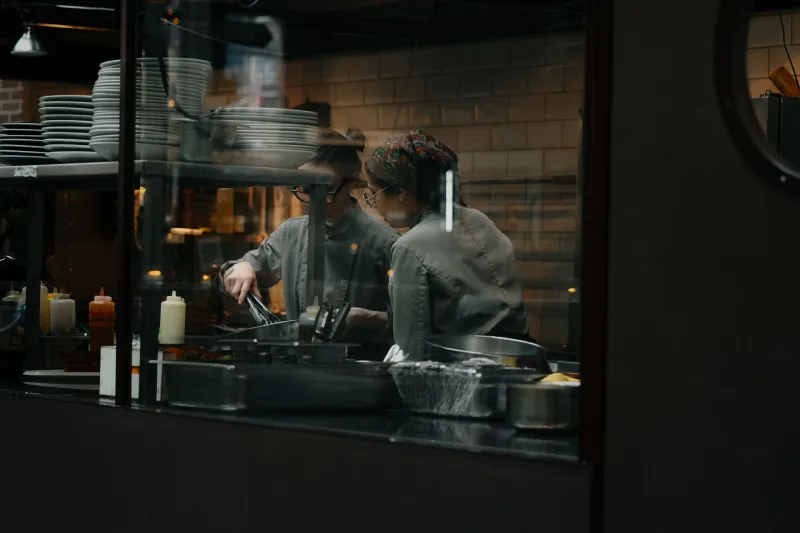
Look at the cohort photographs from any UK culinary college and women are well represented — often comprising half or more of the students in any given year. Look at the list of head chefs and executive chefs at Britain's Michelin-starred restaurants, its leading hotel groups, or its most prominent independent kitchens, and the picture changes dramatically. Women remain a minority at the highest levels of professional kitchen leadership, and the gap between entry-level representation and senior-level presence is not narrowing at a pace that reflects either the talent available or the urgency of the problem.
This is not a new observation. What has changed is the quality of the conversation around it — and, in a growing number of kitchens and organisations, the seriousness of the response.
The Numbers Behind the Narrative
Precise sector-wide data on gender distribution across kitchen roles in the UK is not comprehensively collected, which is itself part of the problem. The absence of standardised reporting means that the scale of underrepresentation at senior levels is often visible only through anecdote and observation rather than verified statistics.
What data does exist paints a consistent picture. Research conducted by the Hospitality and Catering News and various industry bodies over recent years has repeatedly found that women account for a minority — typically estimated at between fifteen and twenty-five per cent — of head chef positions in the UK. This figure drops further at executive chef and group executive chef level. The disparity is particularly pronounced in the fine dining segment, where kitchen culture has historically been most resistant to structural change.
By contrast, women make up a substantially larger proportion of the workforce in pastry, events catering, and institutional catering — areas that carry genuine skill requirements but are perceived, within the industry's own hierarchies, as lower in prestige than the brigade kitchen structure of a la carte restaurant service.
Structural Barriers: Hours, Culture, and the Attrition Point
Women who have worked their way through junior and mid-level kitchen roles frequently identify a specific moment at which the path forward becomes disproportionately difficult. It tends to coincide with the transition from senior sous chef to head chef — a move that typically demands not just greater culinary responsibility but a qualitative shift in working patterns, availability expectations, and personal visibility.
The hours required at head chef level in many UK kitchens remain incompatible with primary caring responsibilities, which in Britain continue to fall disproportionately on women. The structural inflexibility of brigade kitchen scheduling — the expectation of six-day weeks, late-night service, and availability during peak holiday periods — creates an environment in which progression beyond a certain point effectively requires the absence of caring commitments.
This is not a personal failing on the part of the women who step back or step sideways. It is a structural design problem. Kitchens that have not examined their scheduling assumptions are not neutral environments — they are environments optimised for workers without primary caring responsibilities, which in practice means environments that favour men.
Beyond hours, kitchen culture in some establishments continues to pose specific challenges for women. The language of the brigade, the tolerance of aggressive management styles, and the normalisation of banter that would not be acceptable in other professional contexts all contribute to an environment that many women find unwelcoming, regardless of their culinary ability. Women who do advance into senior roles in such environments frequently report having had to navigate these dynamics in ways that their male peers did not — an invisible additional cost that accumulates over the course of a career.
The Mentorship Deficit
Access to mentorship is one of the most consistently cited factors in career advancement across professional fields, and kitchen careers are no exception. The difficulty for women in culinary roles is that formal mentorship structures are largely absent from the sector, and informal mentorship — the kind that develops through proximity, shared experience, and mutual recognition — has historically been more readily available to men.
In a kitchen environment where the majority of senior figures are male, the natural mentorship pathways that exist tend to replicate existing demographics. Junior male chefs find it easier to build relationships with senior male chefs; junior female chefs may find themselves without a natural advocate at the level where advocacy matters most.
Several initiatives are working to address this directly. The Féile Food Network, Women in Hospitality, and various regional mentorship programmes have created structured connections between established female chefs and those earlier in their careers. The impact of these initiatives is difficult to quantify in the short term, but the professionals who participate consistently describe them as significant — not simply for the practical guidance received, but for the affirmation that advancement is possible and that others have navigated the same terrain.
The Establishments Changing the Model
Among the most persuasive evidence that the barriers are structural rather than inevitable is the record of kitchens that have deliberately redesigned their working arrangements and produced different outcomes.
A number of female-led restaurants and kitchen operations in the UK — including several that have attracted significant critical recognition — have demonstrated that high culinary standards are entirely compatible with scheduled days off, transparent rota systems, and management cultures that do not depend on intimidation for their authority. These establishments are not simply more pleasant places to work; they tend to exhibit lower staff turnover, more consistent service quality, and a broader pipeline of talent at all levels.
The lesson is not that female leadership automatically produces better workplaces — individual management styles vary regardless of gender. The lesson is that the working practices most commonly associated with high-end kitchen culture are choices, not requirements, and that different choices produce different outcomes for the composition of the workforce.
What Meaningful Change Requires
Addressing the underrepresentation of women in senior kitchen roles is not a matter of adjusting one variable. It requires simultaneous attention to scheduling structures, management culture, mentorship access, and the transparency of promotion criteria.
For operators, the practical starting point is an honest examination of their own kitchens. What proportion of women who enter at junior level are still present at senior sous chef level five years later? Where attrition is disproportionate, the reasons are worth investigating rather than assuming.
For the industry's professional bodies and training institutions, the collection and publication of gender-disaggregated data on kitchen career progression would transform the quality of the conversation. You cannot meaningfully address a problem that you cannot measure.
For the women already working in professional kitchens across Britain, the evidence of those who have advanced — and of the kitchens they have built — is worth holding clearly in view. The barriers are real and they are significant, but they are being dismantled, in kitchen after kitchen, by those who refuse to accept them as permanent features of the landscape.