Academic Advantage: Universities Emerge as Britain's Secret Weapon for Hospitality Talent Development

The Hidden Training Grounds
Across Britain's university campuses, a quiet revolution is reshaping hospitality recruitment. Student unions running complex venue operations, campus hotels managing thousands of guests annually, and catering services feeding entire communities are producing graduates with authentic commercial experience that traditional academic programmes cannot match.
This practical education model challenges established industry assumptions about graduate readiness. Where hospitality operators once viewed university leavers as requiring extensive on-the-job training, campus-based experience is producing work-ready professionals with proven operational competence.
Surrey's Hospitality Innovation Hub
The University of Surrey's hospitality and tourism management programme exemplifies this integrated approach. Students operate real venues within the campus environment, managing everything from event catering to conference services. The programme's industry partnerships with Hilton, Marriott, and other major operators ensure curriculum relevance whilst providing direct recruitment pathways.
Graduate employment rates tell the story convincingly. Surrey hospitality graduates achieve 95% employment within six months, with starting salaries averaging 20% above industry norms. Many bypass traditional entry-level positions, moving directly into supervisory or specialist roles.
James Crawford, a Surrey alumnus now managing director of a boutique hotel group, reflects on the programme's impact: "University gave me genuine P&L responsibility before I turned twenty-one. I understood revenue management, staff scheduling, and customer service delivery because I'd lived it daily for three years. That experience proved invaluable when I entered the professional market."
Oxford Brookes: The Academic-Commercial Bridge
Oxford Brookes University operates one of Europe's most sophisticated hospitality training environments. The Headington Hill campus includes a fully operational hotel, restaurant, and conference centre managed entirely by students under academic supervision.
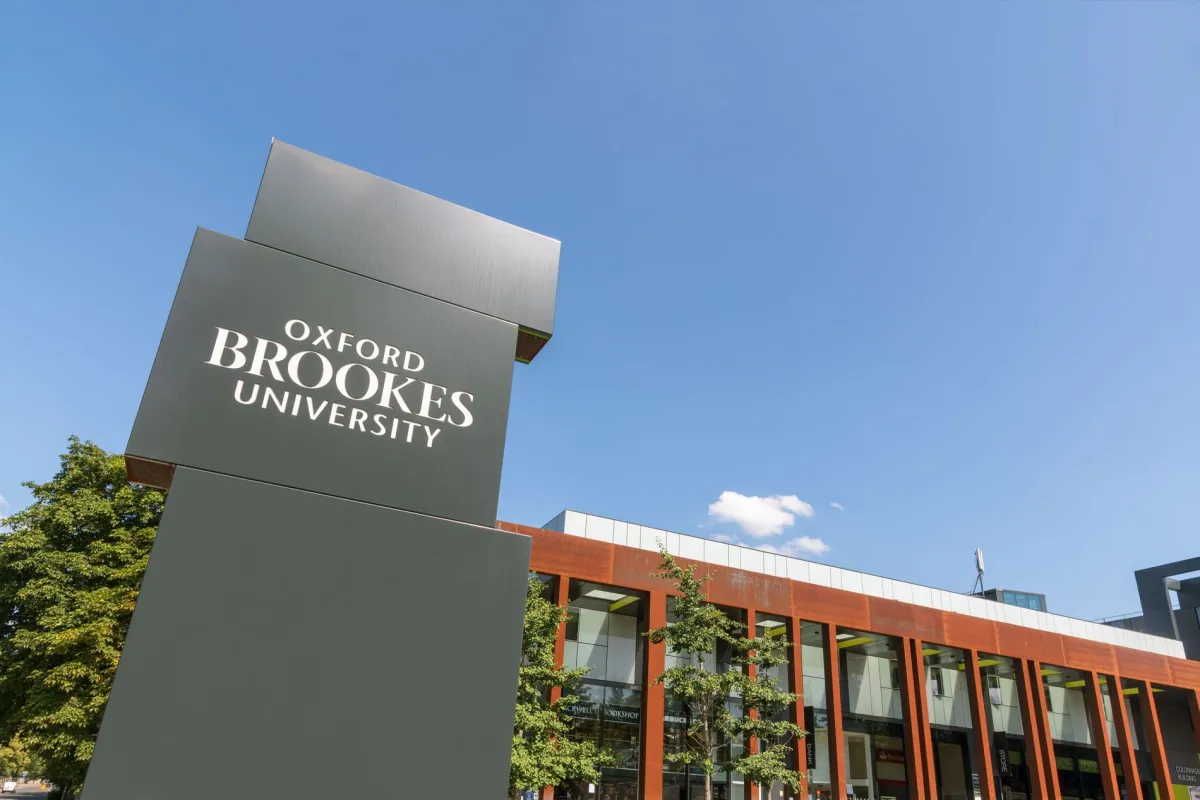 Photo: Oxford Brookes University, via www.simmtronic.com
This model produces graduates with documented experience across all operational departments. Students rotate through front office, housekeeping, food and beverage, and events management, developing comprehensive understanding of integrated operations.
The programme's industry advisory board includes senior executives from major hospitality groups who influence curriculum development and provide direct recruitment opportunities. This partnership ensures academic learning aligns with commercial requirements whilst giving employers early access to promising talent.
Edinburgh Napier: Scotland's Hospitality Laboratory
Edinburgh Napier University leverages Scotland's tourism strength through innovative industry integration. Students work within Edinburgh's festival economy, managing temporary venues and large-scale events that attract international audiences.
 Photo: Edinburgh Napier University, via pbs.twimg.com
The programme's partnership with Edinburgh's hospitality sector provides students with exposure to premium operations during peak trading periods. This experience proves particularly valuable for developing crisis management skills and operational resilience under pressure.
Market research indicates Edinburgh Napier graduates demonstrate exceptional adaptability and problem-solving capabilities, attributes highly valued by employers operating in dynamic environments.
The Student Union Revolution
Student unions across Britain operate increasingly sophisticated hospitality businesses. Manchester Student Union runs venues generating annual revenues exceeding £8 million, whilst Leeds University Union manages multiple bars, restaurants, and entertainment spaces serving diverse customer segments.
These operations provide students with authentic commercial experience managing real budgets, staff teams, and customer expectations. Unlike simulated learning environments, student union venues face genuine market pressures and competitive challenges.
Emma Harrison, general manager of Birmingham University's Guild of Students, emphasises the developmental value: "Our venues operate as proper businesses with demanding customers and tight margins. Students learn quickly that theoretical knowledge means nothing without practical application. They develop commercial awareness that traditional lectures cannot provide."
Campus Hotels: The Professional Training Ground
Several universities operate on-campus hotels that serve as practical training facilities whilst generating commercial revenue. These establishments provide students with exposure to professional hospitality standards whilst offering employers insight into emerging talent.
The model proves particularly effective for developing operational competence across multiple departments. Students experience the interconnected nature of hospitality operations, understanding how front office efficiency impacts housekeeping productivity and how food service quality affects overall guest satisfaction.
Industry Partnership Models
Leading hospitality operators increasingly recognise universities as talent development partners rather than simple recruitment sources. These relationships involve curriculum consultation, guest lecturing, internship programmes, and graduate fast-track schemes.
Premier Inn's partnership with multiple universities includes management trainee programmes that compress traditional development timescales. Graduates enter the scheme with proven operational experience, enabling accelerated progression into management roles.
Similarly, Whitbread's collaboration with university hospitality programmes provides structured pathways from campus to corporate leadership. The company's graduate retention rates exceed 85%, significantly above industry averages.
The Employer Advantage
Hospitality employers benefit significantly from university partnerships. Access to motivated talent with proven capabilities reduces recruitment costs whilst improving retention rates. Graduate employees bring fresh perspectives and contemporary skills that enhance operational effectiveness.
Moreover, university partnerships provide employers with insight into emerging trends and innovative practices. Academic research often identifies operational improvements and market opportunities that benefit commercial partners.
Building Effective Academic Relationships
Hospitality operators seeking to develop university partnerships should approach relationships strategically. Successful collaborations require mutual benefit, with employers contributing expertise whilst gaining access to talent and research capabilities.
Effective partnerships involve regular communication, shared objectives, and measurable outcomes. Employers should participate actively in curriculum development, ensuring academic programmes remain commercially relevant whilst meeting educational objectives.
The Graduate Differential
University-trained hospitality professionals consistently demonstrate superior analytical capabilities and strategic thinking compared to traditional recruits. Their academic foundation enables them to understand complex operational relationships and implement systematic improvements.
This analytical approach proves particularly valuable as hospitality operations become increasingly data-driven and technology-dependent. Graduate employees adapt more readily to new systems and processes whilst contributing to innovation initiatives.
Future Trajectory
The integration of academic and commercial hospitality training continues evolving. Universities are developing more sophisticated industry partnerships whilst employers recognise the value of academically-trained professionals with practical experience.
This evolution suggests a fundamental shift in hospitality recruitment patterns. Rather than viewing university education as divorced from operational reality, the industry increasingly embraces academic institutions as essential talent development partners.
The success of university-based hospitality programmes challenges traditional assumptions about graduate readiness whilst demonstrating the value of combining theoretical knowledge with practical application. As Britain's hospitality sector faces ongoing skills shortages, these academic partnerships provide sustainable solutions for talent development and industry advancement.