The Rural Recalculation: Weighing the True Costs and Rewards of Leaving City Hospitality Behind
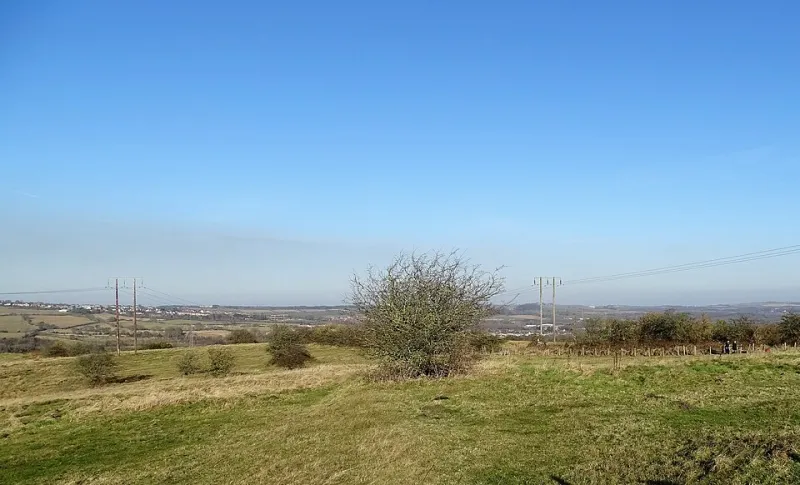
Photo: Robert Graham , CC BY-SA 2.0, via Wikimedia Commons
The decision rarely arrives suddenly. It tends to accumulate — through a series of late finishes on rain-slicked city pavements, through the arithmetic of commuting costs against take-home pay, through a growing awareness that the professional milestones being pursued carry diminishing personal resonance. For a significant and apparently growing number of British hospitality professionals, the moment eventually arrives when the rural option ceases to feel like a retreat and begins to feel like a strategy.
What is happening across the UK's countryside inns, coastal hotels, and village restaurants is more than a lifestyle trend. It represents a genuine reorientation of career thinking among experienced practitioners who are applying their urban-honed skills to settings where those skills are scarce and, consequently, highly valued.
Understanding the Motivation
The professionals making this transition are not, in the main, fleeing failure. They are, more typically, individuals who have achieved a degree of urban career success and are questioning whether the framework within which that success was defined still serves them.
For many, the catalyst is housing. The cost of living in London, Manchester, Edinburgh, and other major cities has reached a point where even senior hospitality salaries provide a narrowing margin of financial comfort. The prospect of a modest salary reduction accompanied by substantially lower housing costs, shorter commutes, and access to outdoor space represents an arithmetically attractive proposition for professionals in their thirties and forties.
For others, the driver is professional. Large urban operations — particularly branded hotels and high-volume restaurant groups — can produce a sense of functional narrowness, where the scope of any individual's contribution is constrained by organisational scale. A general manager at a 300-bedroom city hotel may exercise less genuine operational breadth than a deputy manager at a twelve-bedroom rural inn, where the role encompasses everything from cellar management to supplier relationships to community engagement.
And for some, the motivation is simply experiential. The hospitality industry, at its finest, is about creating environments in which people feel genuinely well. Professionals who entered the sector for that reason sometimes find that the urban context has accumulated layers of operational complexity that obscure the original purpose. Rural settings, with their closer proximity to the guest experience and the natural environment, can restore a sense of direct connection to that founding motivation.
What Candidates Genuinely Sacrifice
Honesty demands that the losses be acknowledged alongside the gains. For professionals accustomed to the infrastructure of city hospitality careers, rural relocation involves real adjustments.
Salary compression is the most immediately tangible. A head chef who commands £50,000 in a London brasserie may find that comparable rural positions offer considerably less, even after accounting for housing cost differentials. Senior front-of-house managers should anticipate that base salaries in rural properties frequently run below their urban equivalents, and that tronc income — dependent on covers and average spend — may also be lower in lower-volume operations.
Career progression pathways are less clearly defined in rural settings. The structured promotion ladders of larger urban groups, with their defined competency frameworks and internal mobility programmes, do not translate directly to independent rural properties. Ambitious professionals must be comfortable with a degree of lateral development rather than vertical ascent, and must be proactive about maintaining industry connections that might otherwise atrophy with distance.
Professional community is thinner outside major centres. The informal networks — the industry events, the peer conversations over a post-service drink, the proximity to suppliers, educators, and fellow practitioners — that sustain urban hospitality careers require more deliberate cultivation when one is based in a Cumbrian village or a Pembrokeshire coastal town.
Personal lifestyle adjustments also warrant consideration. Rural relocation is not universally straightforward for professionals with partners whose own careers are city-dependent, or for those with family commitments that tie them to specific urban locations.
What Candidates Genuinely Gain
The compensations, for those to whom they matter, are substantial.
Operational breadth is perhaps the most professionally significant. Rural and independent properties typically require their senior staff to engage with the full complexity of hospitality management — procurement, maintenance liaison, events, marketing, community relations, and financial oversight all fall within the practical ambit of roles that would be siloed in larger urban operations. For professionals seeking to build a rounded general management profile, the rural environment is an accelerant.
Relationship depth with guests is a distinguishing feature of smaller rural properties. Repeat visitors who return annually to the same coastal hotel or country inn develop genuine relationships with the staff who serve them — a dimension of hospitality practice that is structurally difficult to achieve in high-turnover urban environments. Many professionals who have made the transition cite this as the most unexpectedly rewarding aspect of rural work.
The quality of life dividend is real and measurable. Lower housing costs, reduced commuting time, access to landscape, and a slower ambient pace contribute to wellbeing outcomes that are increasingly valued by experienced professionals who have spent formative years in high-pressure urban environments.
What Rural Operators Look For
Operators running rural properties speak consistently about the particular value of urban-trained professionals, and equally consistently about the characteristics that determine whether that experience translates successfully.
Adaptability is paramount. Professionals who have operated within the support structures of large urban groups — dedicated HR, centralised procurement, in-house maintenance — must demonstrate the capacity to function without those scaffolds. Rural operators are not looking for candidates who will attempt to replicate urban systems in an inappropriate context; they are looking for individuals who can apply the principles behind those systems with resourcefulness and pragmatism.
Community orientation matters considerably. Rural hospitality properties are embedded in local communities in ways that city operations are not. The relationship with local suppliers, the involvement in community events, and the role of the property as a social anchor for its surrounding area all require a disposition towards genuine engagement rather than professional detachment.
Operators also value patience with the rhythms of rural business. Seasonality is more pronounced outside cities, and the financial and operational disciplines required to manage a property through a quiet February differ substantially from those demanded by year-round urban trading. Candidates who can demonstrate awareness of — and comfort with — this cyclical character are significantly more attractive than those who appear to regard seasonal variation as a problem to be solved.
Making the Transition Deliberately
For professionals genuinely considering this path, the Guild's counsel is to approach it as a strategic career decision rather than an emotional one. Visiting prospective properties as a guest before applying provides invaluable context. Speaking with current and former staff at rural operations reveals the realities that job descriptions do not capture. And engaging honestly with one's own motivations — distinguishing genuine appetite for rural hospitality from a desire to escape urban pressures — is essential groundwork.
The rural option is not a lesser version of a city career. For the right professional, at the right moment, it is a more complete one.